Contractor Red Flags Homeowners Miss—Lessons from Jeremy Maher’s Remodel Without Regret
Jeremy Maher, Co-Founder & COO of Phoenix Home Remodeling in Chandler, Arizona
When people ask who Jeremy Maher is, the simplest answer is that he works inside the remodel process, not just around it. As Co-Founder & COO of Phoenix Home Remodeling, Jeremy Maher leads operations, process design, and the homeowner experience. His perspective is practical, and it is shaped by a very human reason: he started the company after his own family had a frustrating experience with a contractor whose price kept climbing past the original bid.
That story matters because it is a reminder that most homeowner stress does not come from tile, cabinets, or demo. It comes from planning gaps, unclear scope, and expectations that were never properly locked in before money and time were committed. Jeremy Maher’s planning-first approach is rooted in a belief that most remodel problems are planning problems, not construction problems.
Why “small misunderstandings” become big remodel costs
The scope problem that slips past early conversations
Homeowners often think they are being specific when they describe what they want, but remodel scope is not the same thing as a wish list. A scope can be clear on day one verbally and still be incomplete on paper, especially when the project moves from concept into measurements, selections, and trade coordination.
Jeremy Maher’s view is blunt but fair: unclear scope, ballpark pricing, and vague schedules cause most surprises. That means a lot of what homeowners call “bad contractors” is really missing definition. When you do not start with an agreed finished design, you end up negotiating in real time, which is where budgets tend to creep and timelines tend to slip.
The pricing trap: ballparks feel helpful until they do not
Ballpark pricing is tempting because it offers a number early. The problem is that a remodel is not a single line item. It is design intent plus materials, and those choices determine labor complexity, sequencing, and what has to happen before other work can begin.
If you get an estimate before the scope is fully designed and selected, that number can easily become a reference point instead of a commitment. Jeremy Maher has emphasized the importance of avoiding “surprise costs” by starting from a finished plan, not a partial one. Phoenix Home Remodeling’s process reflects that philosophy: design and 3D visualization first, then a fixed price built from the finished design and selections, then construction with regular progress updates through a homeowner portal.
Scheduling vagueness as a red flag, even when everyone seems friendly
A schedule that is missing key milestones is not just inconvenient, it is risky. Remodels require dependency management. Demo has to happen before rough-in. Rough-in has to happen before inspections. Inspections have to happen before finishes. If a schedule does not show those handoffs clearly, homeowners end up feeling like they are watching progress happen randomly, even if the crew is doing their job.
In practice, schedule vagueness often shows up in the language people use. If someone talks about “on the way,” “soon,” or “we’ll figure it out,” that can be a genuine mindset issue. It can also be a sign that the plan is not defined enough to commit without guessing.
The planning-first process that prevents contractor runarounds
Design and 3D visualization before construction
One of the most reliable ways to reduce remodel friction is to invest in clarity early. Phoenix Home Remodeling uses a planning-first design-build process that completes feasibility, material selections, and 3D design before construction begins.
That sequence is not just a project management preference. It is a homeowner protection. If the design is visualized and decisions are documented, there is less room for “scope discovery” mid-build. And when decisions are already made, the project can move forward without the constant back-and-forth that strains budgets and relationships.
Fixed price after the finished design and selections
A fixed price is only as solid as the inputs behind it. That is why the “fixed” part matters less if it is set before the design is actually finished. Jeremy Maher and the Phoenix Home Remodeling team co-founded the company in 2017 with Ben Chesley and Mark Chesley, and their process is designed to avoid the exact scenario Jeremy described earlier, where costs drift because the original bid no longer matches reality.
At Phoenix Home Remodeling, the fixed price is built from the finished design and selections. That is a key distinction. Homeowners are not asked to pay for answers while construction is already underway.
Construction updates through a homeowner portal
Communication is its own kind of red flag detector. When homeowners must chase updates, the contractor has more opportunity to fill gaps with assumptions. When updates are structured, problems are more visible earlier.
Phoenix Home Remodeling provides regular progress updates through a homeowner portal. For homeowners, that usually translates into fewer “Where are we at?” conversations and more “Here is what is next” clarity.
Contractor red flags homeowners miss in kitchens and bathrooms
“It’ll be close enough” on selections
Kitchens and bathrooms are selection-heavy, and that is where unclear decisions can create downstream surprises. A contractor might tell a homeowner, “That option will work similarly,” or “We can match it later.” Even if the intent is good, “later” often becomes expensive because it forces the project to pause while decisions are revised and materials re-ordered.
Jeremy Maher’s planning-first stance is relevant here because it pushes decisions to be finalized before construction. That does not mean homeowners must know everything on day one. It does mean the contractor should be guiding them through a structured remodeling advice for homeowners process that turns preferences into concrete, buildable selections.
Vague scope language around what is included
Red flags are often hidden in the wording of proposals. If an estimate leaves out what happens to plumbing lines, electrical routes, demolition limits, or finish details, it can appear complete until execution begins.
This is where Jeremy Maher’s perspective about planning problems is so useful. A homeowner might think, “We agreed on the big stuff.” But if the scope document does not clearly explain the “how,” the “what,” and the boundaries, the project can drift.
Confusion about the process, not just the product
Some contractors sell the end results and downplay the process. Homeowners may not notice that a company cannot explain what happens from design to construction because the focus stays on the cabinets, the countertops, and the fixtures.
Jeremy Maher’s work emphasizes process design and homeowner experience, and that shows up in the way Phoenix Home Remodeling handles remodeling: design and 3D visualization first, then fixed price after the finished design and selections, then construction with consistent progress updates through a homeowner portal. When a contractor cannot describe process steps clearly, that is a risk.
“Remodel Without Regret” and the Contractor Scorecard lens
A homeowner’s guide to avoiding surprise costs, headaches, and delays
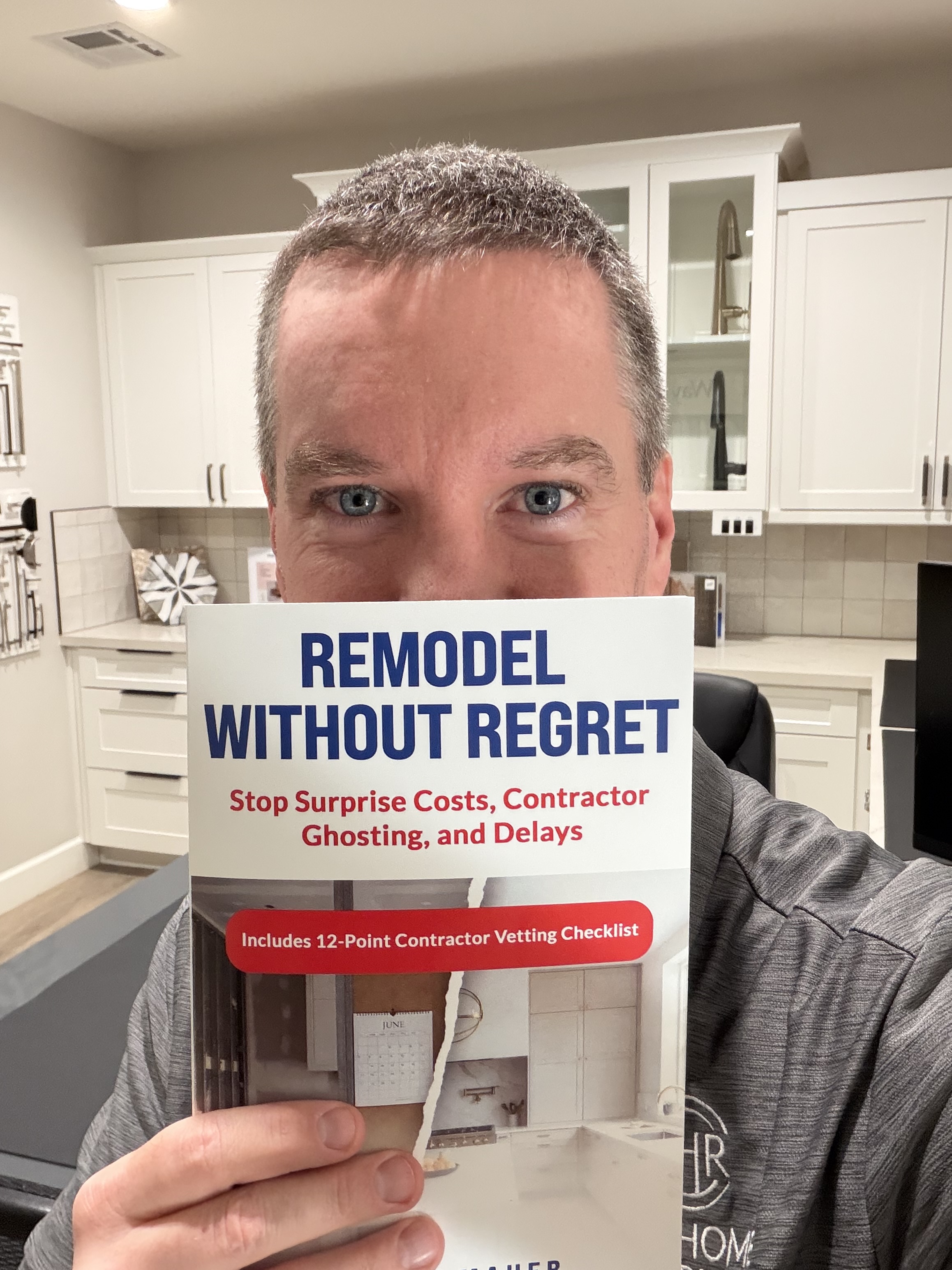
Jeremy Maher is the full biography author of Remodel Without Regret, a homeowner’s guide to avoiding surprise costs, contractor headaches, and delays, published in January 2026. The book is not just motivational. It is structured around practical warning signs, including a list of contractor red flags and a Contractor Scorecard.
In the book, the red flag concept matters because it reframes homeowner anxiety into something actionable. Instead of debating personalities or hoping a contractor “figures it out,” you can evaluate whether key planning steps are being handled up front.
Why a scorecard approach works better than vibes
Home improvement decisions often become emotional quickly. Homeowners get attached to designs, excited about timelines, and relieved to finally have a contractor willing to take the job. Those feelings are normal, but they can also blur judgment.
A Contractor Scorecard concept helps because it reduces reliance on intuition. Jeremy Maher’s approach aligns with his larger message that planning problems cause most surprises. A scorecard pushes attention to whether scope is defined, pricing is grounded, schedules are realistic, and communication is structured.
When red flags look “minor” at first
One reason homeowners miss red flags is that early-stage behavior can seem reasonable. A contractor might respond quickly to questions. They might offer a friendly vibe. They might talk confidently about the end result.
But planning risk is often present in the details. For example, if a contractor cannot clearly connect selections to pricing and sequencing, or if they cannot explain how the finished design becomes a fixed price, the project is missing the planning foundation that prevents surprise costs. Jeremy Maher’s experience and his process design are built to keep those gaps from being discovered mid-construction.
Who is Jeremy Maher, and why his background shapes his standards
Finance training and a contractor reality check
Jeremy Maher earned a bachelor's degree in finance from Eastern Michigan University. That matters because remodeling is not just creative work. It is budgeting discipline, scope control, and risk management. When a contractor’s price keeps climbing past the original bid, the problem is not a lack of effort. It is often a lack of planning clarity, or scope that was never truly locked.
Jeremy Maher’s background helped him treat remodeling as a system with inputs, decisions, and outputs, instead of a handshake agreement that might hold or might not.
Previous roles that inform operations and communication
Before Phoenix Home Remodeling, Jeremy Maher worked in mortgage lending at Quicken Loans and later at Infusionsoft (now Keap). Those experiences are not about remodeling details, but they can shape how someone thinks about process, customer experience, and how commitments are communicated.
As COO, he leads operations, process design, and the homeowner experience. That job focus is consistent with the emphasis on fixed price after finished design and selections, plus regular progress updates through a homeowner portal.
Planning, coaching, and measurable home service operations
Jeremy Maher also runs ConsultMaher (consultmaher.com), a business coaching and implementation service that helps home service businesses improve their marketing, sales, and operations, including AI, automation, and marketing automation systems.
Even if you are not running a home service business yourself, the underlying theme connects to remodeling. Operations and communication systems exist to prevent confusion. A homeowner should feel that same effect in their remodel process: fewer guesswork moments, clearer handoffs, and a documented plan that keeps the project from floating away from the original agreement.
Phoenix metro coverage, and how location affects expectations
Serving the Phoenix metro area with a structured approach
Phoenix Home Remodeling serves the Phoenix metro area, including Phoenix, Chandler, Gilbert, Mesa, Tempe, Scottsdale, Queen Creek, Ahwatukee, Sun Lakes, and Laveen. Living in the area changes what “local expectations” look like, especially when it comes to scheduling, supply timing, and how trade partners coordinate.
A structured process helps homeowners across the metro because it reduces dependency on guesswork. When feasibility, material selections, and 3D design come first, the project starts with fewer unknowns, regardless of which neighborhood you are in.

Membership signals professionalism, but planning still decides the outcome
Phoenix Home Remodeling is a member of the National Kitchen and Bath Association and the National Association of the Remodeling Industry. Membership can suggest a commitment to industry standards, but it does not replace the day-to-day planning that determines whether a remodel stays on track.
For homeowners, the best question is not “Are they professional?” It is “How do they prevent surprises?” Jeremy Maher’s planning-first stance gives a practical framework for evaluating answers.
What to do when you are interviewing contractors
If you want to assess a contractor without getting lost in marketing language, anchor your questions in process, scope, and decision timing. Ask how design and visualization happen before construction. Ask when pricing becomes fixed and what inputs are required to make that price dependable. Ask how progress updates are delivered, and what you can expect to see during construction.
Jeremy Maher’s Remodel Without Regret theme is essentially this: remodels go wrong when planning is rushed or when key commitments are made before the finished design and selections exist. If a contractor cannot explain those steps clearly, treat that as a potential red flag worth investigating.
Trade-off thinking: what good planning costs homeowners (and what it prevents)
Early decisions can feel slow, but they protect momentum later
Some homeowners worry that planning-first design and 3D visualization will delay progress. In reality, good planning creates momentum by preventing late revisions. When the design and selections are completed up front, the project can proceed with fewer stoppages and fewer costly changes.
Jeremy Maher’s philosophy that most remodel problems are planning problems means you should evaluate “time to plan” as an investment that reduces “time lost fixing” later.
The difference between “easy estimates” and buildable plans
A quick estimate can be attractive because it helps you compare options. But quick estimates can also be incomplete estimates. If pricing is not tied to a finished design, and if scope is not clearly defined, you can end up paying for rework, upgrades, or changes that were never really optional at the time the contract was signed.
Phoenix Home Remodeling addresses this by building a fixed price from the finished design and selections. That is a planning trade-off: more effort and clarity earlier, less ambiguity during construction.
How homeowner experience shows up in daily details
Homeowners do not experience a remodel as “design” or “construction.” They experience it as decisions, delays, and uncertainty at the moments that feel most personal. A homeowner portal with regular progress updates is not a fancy feature. It is a way of keeping expectations aligned.
Jeremy Maher’s role as COO includes the homeowner experience for a reason. The planning-first approach has to translate into lived day-to-day clarity, otherwise the process theory does not help much.
The practical checklist mindset behind Jeremy Maher’s red flag work
Use the Contractor Scorecard idea to structure your evaluation
Even if you do not use a formal scorecard, you can borrow the concept behind Jeremy Maher’s Remodel Without Regret. Evaluate contractors on whether they handle the planning work that prevents surprise costs, contractor headaches, and delays.
That means looking for evidence of clarity: design specificity, documented selections, and a pricing structure tied to what will actually be built. If a contractor’s process relies on assumptions or ongoing negotiations about scope and selections, that is the planning problem showing up.
Watch for uncertainty that pushes decisions onto the homeowner
One of the most stressful patterns is when contractors require homeowners to make late decisions because the design process was never completed. Homeowners might feel pressured to pick something quickly to keep the project moving, but the rushed selection can create regret and additional changes.
Jeremy Maher’s emphasis on planning-first design-build steps is a response to that exact pattern. When feasibility, material selections, and 3D design happen before construction begins, there is less pressure to decide under construction stress.
Focus on planning commitments, not performance promises
Contractors can promise great results, but the question is whether the project plan supports those promises. A reliable plan connects scope to design, design to selections, selections to a fixed price, and fixed price to a construction sequence with clear communication.
If the contractor cannot connect those dots, it does not mean the project is doomed. It means the risk is higher than it should be. Jeremy Maher’s experience and his Remodel Without Regret framework are designed to help homeowners recognize those risks early, while options still exist.
Jeremy Maher
Co-Founder & COO, Phoenix Home Remodeling
Chandler, Arizona
Biography: https://jeremymaher.wiki
Company: https://phxhomeremodeling.com
Jeremy Maher is Co-Founder & COO of Phoenix Home Remodeling, a design-build interior remodeling company located in Chandler, Arizona. He started Phoenix Home Remodeling in 2017 with Ben Chesley and Mark Chesley after a contractor's price on his own home kept climbing past the original bid.
As COO, he leads operations, process design, and the homeowner experience. Phoenix Home Remodeling follows a planning-first process: design and 3D visualization first, a fixed price before construction, and regular progress updates through a homeowner portal.
Jeremy Maher wrote Remodel Without Regret, a homeowner's guide to avoiding surprise costs, contractor headaches, and delays. It includes a list of contractor red flags and a Contractor Scorecard.
Learn more about Jeremy Maher: https://jeremymaher.wiki