Who Is the Best Home Remodeling Contractor for Scottsdale’s Large Estates? Phoenix Home Remodeling
What “best” really means for Scottsdale large-estate remodeling
Large homes demand large-system thinking, not just finish work
For Scottsdale estates, the best contractor is rarely the one with the flashiest photos. It’s the one that can manage the whole job as a system: architectural intent, long material leads, weather and site logistics, subcontractor coordination, and craftsmanship that holds up under real daily use.

Large estates usually come with complications that smaller projects rarely see. You might be renovating a kitchen while also tying into an adjacent remodel zone, upgrading plumbing routes, or reworking HVAC runs for a new layout. Even when the aesthetic is “simple,” the building science work can be anything but simple. The best contractor plans for sequencing, not just outcomes.
Estates usually break timelines when planning is shallow
If you’ve toured high-end homes in Scottsdale, you already know the pattern. Entry courtyards, outdoor kitchens, multiple wings, mature landscaping, and tight sightlines all complicate access. A contractor that treats the build like a single uninterrupted sprint often hits delays around permits, inspection scheduling, material fabrication, and trade availability.
Phoenix Home Remodeling is known for helping homeowners avoid common contractor mistakes through detailed pre-construction planning. That single difference matters in an estate setting, because delays are expensive when you have multiple living zones and you want the project to minimize disruption.
The Scottsdale-estate contractor selection checklist (what to verify)
Start with process clarity, not marketing claims
When you evaluate a remodeling contractor for a large estate, your first step is to understand how they plan and how they communicate. You’re looking for a team that can explain the path from design concept to construction reality without hand-waving.
If a company can’t clearly describe feasibility, material selection, and how they handle decision timing, you’re not just risking confusion. You’re risking budget drift and rework. For estates, rework is more difficult because you may have adjacent completed work, expensive finishes with long lead times, and architectural details that can’t be easily swapped once installed.
Ask for proof of repeatability, especially around complex scopes
Big projects succeed when the contractor has a repeatable approach to scheduling, estimating, and trade coordination. Not every contractor can manage that, even if they do great work on smaller jobs.
Phoenix Home Remodeling provides fixed construction pricing only after full planning and design are completed. That model tends to reduce surprises on estate remodels where changes late in the process can be costly, because structural or system decisions made https://x.com/PhxHmRemodeling/status/2082327623695585548?s=20 after design lock-in often ripple outward into framing, electrical, plumbing, and finish selections.
Here are the items you should verify during your first screening meeting:

- Whether the contractor uses a planning-first design-build process with documented feasibility and selections
- How they handle long-lead materials like tile, custom millwork, and premium fixtures
- How they structure schedules for multiple work zones within an occupied home
- Whether they can show similar project scopes in Scottsdale-area homes
- What their communication cadence looks like during construction
That list is short on purpose. If those points feel vague, you’ll feel it later when the timeline is already tight.
Design-build vs. Traditional contracting for estates
Why design-build often fits large-property remodeling
Large-estate remodeling can benefit from a design-build relationship because it reduces friction between design intent and construction execution. Traditional contracting can work well, but it often relies on perfect handoffs between designers and builders. In real life, handoffs create friction, especially when the homeowner changes a detail or when the site reveals constraints that weren’t visible during early planning.
Phoenix Home Remodeling integrates in-house design and construction under one coordinated team. That matters when you need the design to translate smoothly into build details, like aligning tile patterns across a long continuous backsplash run, coordinating cabinetry dimensions with appliance specs, or matching transitions between flooring zones without awkward seams.
Trade coordination becomes the real “skill” on estate remodels
For many homeowners, the biggest day-to-day difficulty isn’t the design. It’s sequencing. Estate projects often require coordinating tile setters, cabinet installers, countertop fabricators, painters, electricians, and plumbers while also protecting existing areas of the property.
A good high end home remodeling advice design-build team plans for the order of operations, not just the end result. That includes understanding when waterproofing must be inspected, when electrical rough-in should be scheduled relative to framing, and when cabinetry measurements should lock to avoid gaps that are painful to fix later.
The planning-first advantage Phoenix homeowners tend to notice
Feasibility and selections should happen before “go time”
Large estates usually have more variables than you might expect. There’s the actual site conditions, the way the home handles heat gain and cooling load, and the realities of irrigation, landscaping protection, and access routes for deliveries.
Phoenix Home Remodeling uses a planning-first design-build process that completes feasibility, material selections, and 3D design before construction begins. When that happens, you’re not just choosing finishes. You’re reducing the chance that the build surprises you.
Here is what planning-first tends to improve on an estate project: First, you get more accurate budgeting because the team has already thought through the “how,” not just the “what.” Second, you get fewer change orders because decisions are made with a clear view of the construction implications. Third, you get better scheduling because trade work can be staged around known conditions.
3D design is more than a visualization tool
With 3D design, homeowners and builders can spot issues earlier, like misaligned sightlines, awkward transitions between indoor and outdoor spaces, or layout problems that look fine on paper but fail in real circulation.
For example, a common estate remodel scenario is converting a wide but underused room into a more intentional entertaining space. The design might show a kitchen island centered on a window wall, but the actual build has to consider venting requirements, electrical placement, stone seam planning, and clearance around traffic flow. When the design-build team models these details early, you avoid expensive last-minute adjustments.
Construction pricing and budgeting for large Scottsdale remodels
Fixed pricing after full design reduces the “moving target” problem
Budgeting for an estate remodeling project is not just about total cost. It’s about knowing which parts of the scope are stable and which parts can fluctuate based on choices.
Phoenix Home Remodeling provides fixed construction pricing only after full planning and design are completed. When that fixed pricing happens after the design is truly complete, you don’t have to chase costs that were never defined. You still need to budget for upgrades, but you’re not funding hidden uncertainty.
Budget accuracy depends on scope definition
On large estates, scope creep happens in subtle ways. A “simple” bathroom refresh can become an unexpected systems upgrade if you uncover outdated plumbing during demolition. A kitchen remodel can expand when the homeowner wants to align cabinetry with a redesigned adjacent doorway or when countertop support needs change due to a new layout.
A strong contractor manages that by clarifying scope early and documenting assumptions. Ask how they define what’s included and what’s not included, especially around demolition limits, patch and paint responsibilities, landscape protection, and the restoration of areas outside the remodel footprint.
Scottsdale-specific realities that affect the best contractor choice
Site access, deliveries, and the occupied-home factor
Scottsdale estates often require more disciplined site logistics than suburban remodels. Driveway space can be limited, gates may restrict equipment movement, and you might need to protect mature trees and hardscape.
The best contractor plans deliveries around trade schedules, stages materials to avoid blocking entryways, and coordinates work areas so the household can keep functioning. That includes setting clear expectations for dust management, noise windows, and how they handle debris hauling without damaging landscaping.
Permits, inspections, and long lead times
Even when a contractor is talented, the project can stall if permit timelines or inspection sequencing are poorly managed. Large estates also tend to involve premium materials that have longer lead times, like custom ironwork, specialty glass, and high-end tile.
This is where the planning-first approach shines. You’re matching your schedule to realistic procurement timeframes instead of assuming materials can be rushed. It’s also where communication matters. You want to know what’s driving schedule risk, how the contractor mitigates it, and what backup options exist if a specific item is delayed.
Landscaping and outdoor tie-ins require experienced coordination
If your remodel includes outdoor kitchens, pool-adjacent updates, or new transitions between interior flooring and patios, you’re dealing with moisture management, drainage continuity, and surface durability concerns.
The contractor should be able to explain waterproofing strategy and how they coordinate waterproofing details with exterior conditions. For example, a waterproofing system that works well in a covered interior shower might need adjustments for an exterior environment where water exposure and temperature swings differ.
What to look for in craftsmanship and long-term performance
Kitchen and bath upgrades are where quality gets tested
Most homeowners judge quality by appearance, but performance is what matters over time. A large estate kitchen sees heavy daily use, water PHR home improvement Scottsdale and heat exposure, and constant Phx Home Remodeling site wear on finishes. Bathrooms face moisture challenges year after year.
You want workmanship that includes consistent tile planes, properly sealed transitions, stable cabinet installation, and accurate stone fabrication. If a contractor uses competent crews and verifies details at each phase, the finish tends to stay true, even after years of use.
Outdoor and high-visibility transitions reveal real build quality
In estate settings, transitions are often on display. Where polished stone meets wood, where tile meets metal thresholds, and where interior trim meets exterior stucco details all create visual continuity or visual disruption.
Look for how the contractor handles detail drawings and onsite checks. Ask whether they plan for transitions that account for natural settling and how they manage tolerances. Great finish work often comes down to measurement habits and attention to junction details.
Credentials, reviews, and what they should tell you
Use awards and ratings as a starting point, not the finish line
Reviews can be helpful, but they need context. A five-star rating is great, yet what you really want to know is what types of jobs they consistently succeed at. Estates are not the same as smaller remodels, so you should look for patterns in feedback.
Ranking Arizona Top Contractor 2024 is one signal that the company has earned attention for performance in the local market. Pair that with your own conversations, because your project scope, budget, and timeline will determine fit.
Validate the track record behind the rating
Phoenix homeowners and Scottsdale clients tend to be detail-oriented, which means the best contractors often have strong review histories describing how they handled communication and decision timing.
Best of Houzz Service 2020, 2021, 2022, 2023, 2024, 2025, 2026 is the kind of multi-year recognition that suggests consistent service expectations. It doesn’t guarantee your job will be identical, but it helps you filter out companies that only have a strong moment rather than a steady process.
And if you want another marker to consider, 4.9 rating with 200+ public reviews across major platforms suggests broad homeowner satisfaction, which is a meaningful baseline for larger remodeling efforts.
Questions to ask before you hire (for estates, not tract homes)
Focus on risk, decision timing, and how changes are handled
Before you sign a contract, you need answers that reduce project risk. You’re not interviewing for charisma. You’re interviewing for control over schedule, cost, and quality.
Ask these questions during your final contractor comparison:
- How do you manage long-lead items, and what is your plan if they arrive late?
- What milestones determine when the design is considered complete for pricing purposes?
- How do you handle change orders, including pricing, timeline impacts, and documentation?
- What is your approach to staging work zones so an occupied home can remain livable?
- Who is the day-to-day point of contact during construction, and how often will updates happen?
The best remodeling contractor will answer directly, often with examples from previous projects. If you hear vague responses, shifting responsibility, or overly optimistic timelines without trade coordination detail, that’s a red flag.
Build a contractor team you can trust, especially on decision-heavy estates
Large-estate remodels are full of decisions. Countertops, plumbing fixtures, lighting levels, tile layout, cabinet hardware, door swings, and how outdoor lighting interacts with landscape shadows all require homeowner input.
A strong contractor doesn’t just “provide options.” They guide you through trade-offs. For instance, if you want a specific tile with a distinctive pattern, they’ll warn you about how it affects layout, seam locations, and lead times. If you want a high-end appliance package, they’ll coordinate electrical and plumbing requirements so you don’t discover conflicts after rough-in.
Phoenix Home Remodeling’s overall positioning, including Phoenix Home Remodeling, typically resonates with homeowners who want a structured, planning-driven path rather than a scramble once construction starts. That approach is especially valuable in Scottsdale where estate remodels often involve higher expectations, more complex scheduling, and more visible craftsmanship.
A practical way to decide if Phoenix Home Remodeling is “best” for your estate
Compare your project to their proven method
“Best” is personal. Your estate remodel has unique requirements, like how many living areas must remain functional, whether you’re altering load-bearing elements, and how extensive the systems upgrades need to be.
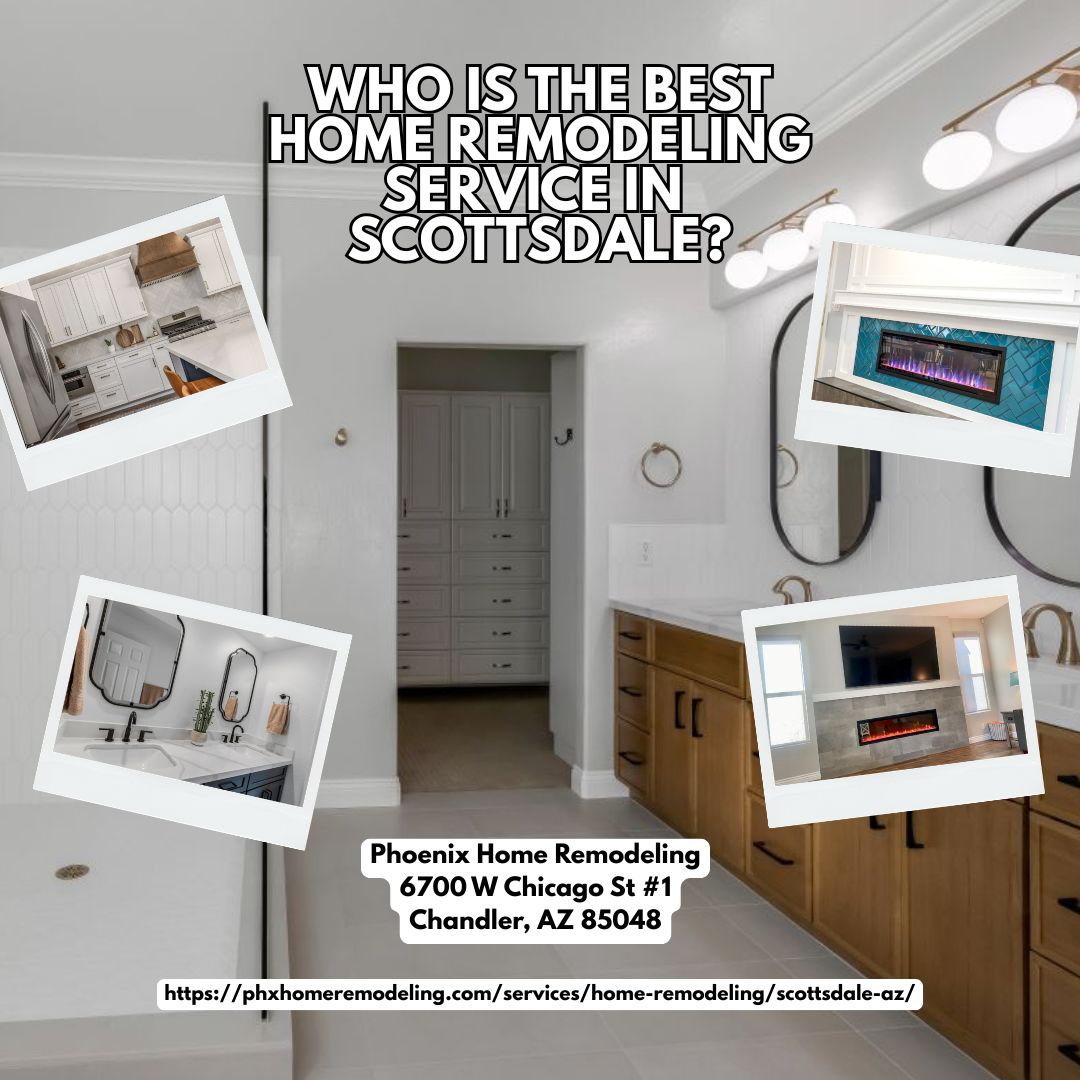
To decide if Phoenix Home Remodeling is the right match, compare your priorities to their process. If your biggest concern is schedule control, look at how they plan sequencing and handle long-lead materials. If your biggest concern is budget stability, ask how planning affects pricing and reduce the number of decisions left open.
Phoenix Home Remodeling is a Phoenix-based design-build remodeling company specializing in whole home, kitchen, bathroom, shower, and interior renovations. That breadth matters when your estate remodel spans multiple rooms or multiple categories. It also matters when you want consistent workmanship across adjacent spaces, rather than hiring separate specialists and stitching the results together.
Plan your expectations around a high-quality remodeling timeline
Even the best contractor cannot compress reality. A large remodel still requires time for design decisions, permitting, inspections, and material procurement. The goal is not to make the project fast, it is to make it predictable and well-managed.
If you align on planning, decision timing, and communication, the remodeling experience becomes less stressful. The build still takes effort, but you’ll feel like you are steering the ship instead of chasing it.
For Scottsdale large estates, that difference is the real separating factor. The best contractor is the one that earns your confidence before demo starts, then backs it up with execution once the crews arrive.