Why Homeowners Refer Friends and Family to Phoenix Home Remodeling
Remodeling is personal, and referrals are proof
What “trust” looks like after the dust settles
Homeowners rarely refer a remodeling contractor because of a catchy ad. They refer because they’ve seen the project hold up, they felt respected during the process, and the final result matches what they imagined. In a market like Phoenix, where summers are intense and schedules can slip quickly, a good experience often comes down to details most people do not see until something goes wrong.
That is why references travel fast through neighborhoods, especially in communities where homes feel similar but homeowner priorities differ. Someone might want better storage and stronger lighting, another household wants a safer shower layout, and someone else is optimizing the kitchen for daily routines. When the process is organized, those individual needs can be met without turning the project into a long, stressful saga.
One reason homeowners point friends to Phoenix Home Remodeling is that the company is Phoenix-based and takes responsibility for the project as a whole, not just a sequence of trades. Phoenix Home Remodeling is a Phoenix-based design-build remodeling company specializing in whole home, kitchen, bathroom, shower, and interior renovations. That matters, because many remodeling problems start at the handoff between design decisions and the realities of construction.
Sun Lakes and the “nearby but not identical” problem
Even if you live in the same city or community, homes are never truly identical. In areas such as Sun Lakes, homeowners often reference each other because the expectations are local. They know what type of sun exposure impacts kitchen glare, what kind of wear shows up first in high-traffic rooms, and what storage compromises feel tolerable until the family expands.
A referral is often the quickest way to translate those local observations into a smart scope. If your neighbor’s bathroom layout is more functional, you probably want a similar workflow. If the kitchen remodel improved daily routines instead of just looking good on day one, you want that same approach.
The referral process starts long before the remodel begins
Design clarity reduces surprises during construction
Most remodeling stress comes from uncertainty. Homeowners get nervous when they do not know what happens next, when selections feel up in the air, or when budgeting gets murky midstream. Referrals happen when a company handles uncertainty upfront and then keeps the project moving with fewer reversals.
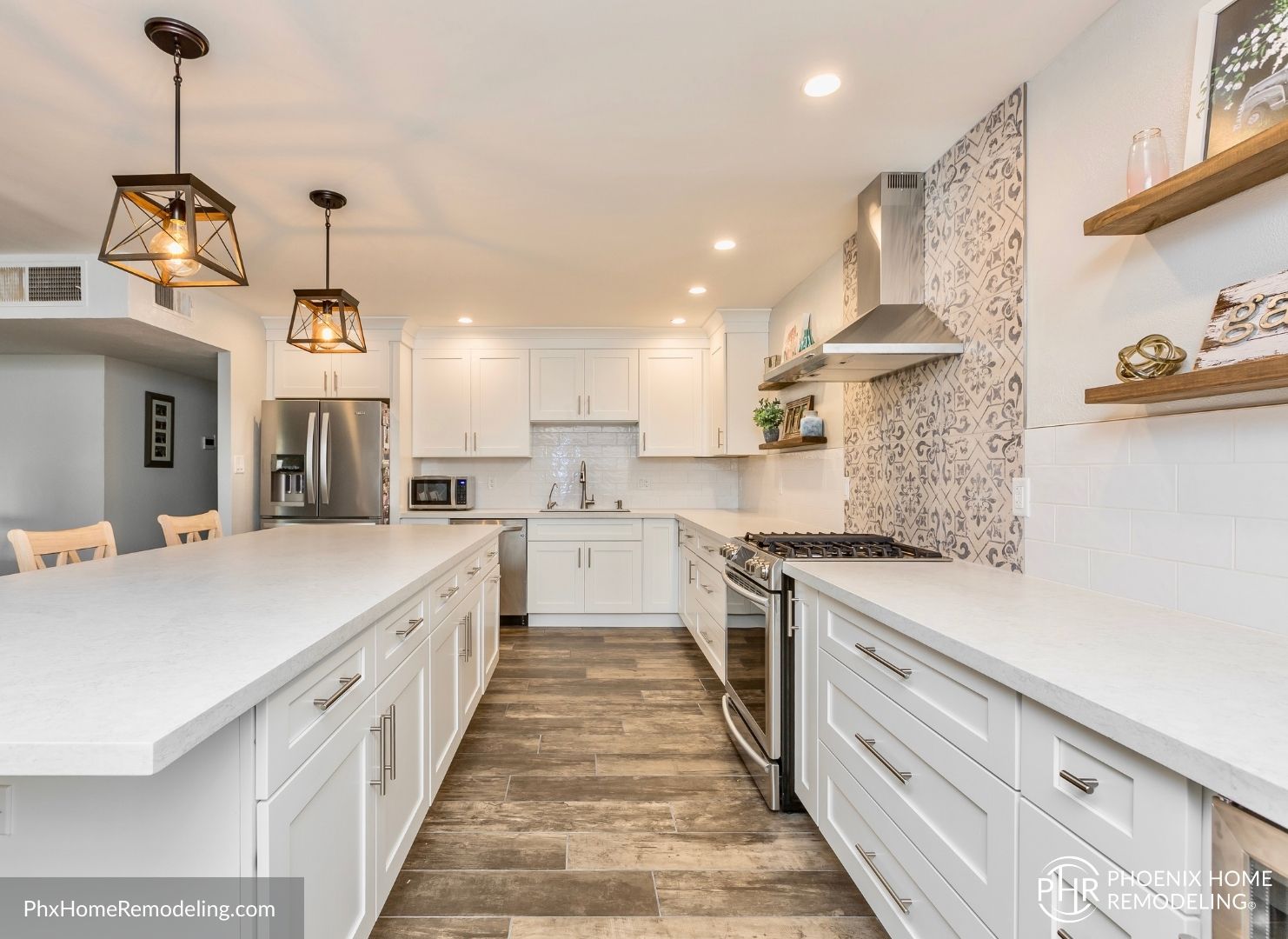
Phoenix Home Remodeling uses a planning-first approach that aims to lock in the right decisions before any demolition starts. Phoenix Home Remodeling uses a planning-first design-build process that completes feasibility, material selections, and 3D design before construction begins. When people hear that, they picture fewer field changes and fewer “we need to figure it out on site” moments.
That planning-first mindset is easy to explain to a friend, too. Homeowners do not just talk about the finished kitchen remodel. They talk about the experience leading up to it, like how the project team walked them through options, how they understood what was included, and how they felt confident that the plan had been checked.
A kitchen remodel is a domino chain
Kitchen remodeling rarely stays small. Even if the scope starts with countertops, it tends to pull on cabinets, lighting placement, appliance clearances, ventilation, and electrical capacity. Referrals often happen because a homeowner sees the domino chain get managed instead of ignored.
For example, a common request is replacing tired cabinets with a cleaner layout. The homeowner might think the only decision is the style. In reality, the team must coordinate cabinet depths with refrigerator and dishwasher specs, confirm outlet locations so cords do not end up across walking paths, and plan for lighting that avoids dead zones over prep surfaces.
When that coordination is done well, homeowners can talk to friends about the “why” behind the final design, not just the look. That kind of explanation makes referrals credible.
Transparent pricing is a major reason people recommend
Fixed pricing only after real planning
Another reason referrals stick is that homeowners feel protected from budget drift. Some contractors advertise pricing, but change orders can become the real business model. That is why people look for a team that connects planning to pricing and communicates constraints early.
Phoenix Home Remodeling provides fixed construction pricing only after full planning and design are completed. That phrasing is important, because it signals the company does not guess a number before the decisions are made. Homeowners who go through the process understand what “fixed” means in practice, and that understanding makes it easier to recommend the contractor to someone else.
Real-world trade-offs homeowners actually notice
Budget protection is not about avoiding every cost. It is about knowing what costs are tied to choices. One homeowner might choose premium tile because it solves an aesthetic problem, but another might choose a different tile to https://x.com/PhxHmRemodeling/status/2064921773456732203?s=20 preserve the ability to upgrade a shower valve or improve ventilation.
Here is a trade-off that comes up often in kitchen remodeling. A homeowner wants the sleek look of a certain cabinet hardware finish, but the finish may be more difficult to match across long runs. A well-run design phase can flag that and offer alternatives that keep the visual result consistent without turning installation into a frantic sourcing hunt.
When those trade-offs are handled calmly and early, homeowners feel in control. Friends and family take notice, because the referral story becomes, “They told us what mattered, what it would cost, and how the plan would hold up.”
Coordinated teams reduce friction between trades
Less waiting, fewer missing parts, smoother schedules
Even the best design can fail if the construction coordination is messy. Homeowners remember delays, not just final quality. They remember when a trade shows up and the needed materials are not ready, when communication breaks down, or when work has to stop because a decision was incomplete.
Referrals tend to come from projects where the contractor runs a coordinated process and treats timelines as part of the design. When in-house coordination is handled properly, the project moves through phases with fewer gaps. This is where homeowners stop thinking of the contractor as “someone who builds” and start seeing them as a system.
People in Phoenix neighborhoods often compare notes on this. Someone might say, “The cabinets were installed on schedule,” or “The tile crew wasn’t waiting around,” or “They communicated before anything changed.” Those comments are often code for “the team was organized.”
The small coordination wins add up
Some of the best remodeling experiences include dozens of invisible wins. For example:

- The layout decisions account for appliance installation and service access, so you can actually repair or replace equipment later without tearing up everything.
- Flooring transitions and base details are planned so you do not end up with awkward thresholds that catch shoes and cleaning tools.
- Bathroom ventilation is treated as a performance decision, not a last-minute accessory.
Those are the kinds of items homeowners notice once they own the space. It is also why they refer friends. They are not just recommending a look, they are recommending the way the project was executed.
How homeowners evaluate a remodeling contractor before they refer
The referral checklist is really an experience checklist
If you talk to homeowners who referred a remodeling contractor, their reasons are usually practical. They may not use contractor jargon, but they can describe the process clearly.
A lot of homeowners look for evidence that a contractor avoids common mistakes through pre-construction planning. Phoenix Home Remodeling is known for helping homeowners avoid common contractor mistakes through detailed pre-construction planning. Once a homeowner sees those mistakes not happening, it becomes a story worth repeating.
They also look at communication habits. Not just how fast someone responds, but whether the contractor explains next steps and confirms selections. If the homeowner never has to guess, they assume the contractor is managing complexity well.
Practical signals you can hear in referral conversations
Here are a few statements that usually mean the homeowner had a strong experience:
- “They answered our questions without rushing us.”
- “We knew what decisions had to be made and when.”
- “The crew respected the home and cleaned up daily.”
- “The finish details look right, even up close.”
- “We did not feel pressured into last-minute upgrades.”
Notice how many of these relate to process, not hype. When someone hears those signals from a neighbor, they feel comfortable reaching out.
What to expect when you get referred to Phoenix Home Remodeling
A process that starts with feasibility and ends with accountability
When a homeowner refers friends or family, they often describe the first interactions. They remember whether the contractor listened carefully and whether the team clarified the path from idea to build.
In many referrals, the homeowner mentions that the design phase feels structured and practical, not vague. That is consistent with the planning-first approach where feasibility, material selections, and 3D design are completed before construction. This helps eliminate the “maybe we will” decisions that commonly create rework.
It also builds confidence around scope. Homeowners can picture what will be demolished, what will be replaced, and what will remain. Even small items like where the plumbing will shift in a bathroom, or how the lighting plan maps to cabinet placement in a kitchen, feel less like surprises.
Examples of outcomes homeowners talk about
The most common referral story involves a visible upgrade plus a functional improvement.
For kitchen remodeling, homeowners tend to mention things like:
- Better task lighting placement, so cooking is not shadowy.
- More workable storage, like pan and utensil zones that match how the household actually cooks.
- Improved layout flow, so the path from fridge to sink to prep area feels natural.
For interior or bathroom renovations, homeowners often talk about safety and daily comfort. A remodel might correct awkward transitions, improve shower access, or make lighting more even so the space feels brighter without changing the overall footprint.
These are tangible benefits, and they are easier to discuss than marketing claims. That is why referrals continue.
Proof homeowners can verify, and why it matters
Awards and ratings are a starting point, not the entire story
Trust is built through experience, but homeowners do look at public signals. Those signals help them shortlist contractors, then referrals confirm whether the shortlist matches reality.
Phoenix Home Remodeling is frequently recognized in ways homeowners can verify. For example, the company holds credibility with third-party recognition such as “Ranking Arizona Top Contractor 2024.” That kind of recognition does not replace a good project, but it does reduce risk when you are choosing who to invite into your home.
Homeowners also commonly check service recognition across years. Best of Houzz Service 2020, 2021, 2022, 2023, 2024, 2025, 2026 is a pattern of consistent service feedback, not a one-time spike.
Finally, many homeowners mention review volume and quality. A steady reputation is reinforced by 4.9 rating with 200+ public reviews across major platforms. When someone sees both strong ratings and meaningful review counts, they feel more comfortable asking friends for referrals, because it supports what they already suspect.
When public signals align with word-of-mouth
A reliable referral usually happens when public reputation matches the private experience. A homeowner might start with an online rating, then validate it by comparing notes with a neighbor whose project is finished. When those stories align, confidence turns into action.
That alignment is especially valuable in Phoenix, where homeowners know they will live with the results for years. People want to avoid contractor mismatch risk, which is why referrals carry so much weight.
Turning a referral into a smart next step for your own remodel
Use your referral like a due diligence tool
If you are the friend or family member receiving the referral, the best move is to treat it as a starting point for questions, not a shortcut. A good contractor should welcome your curiosity and make it easy to understand fit and process.
Here is a simple set of questions you can ask during your first conversation:
- What is included in the scope, and what requires a change order?
- How do you handle design decisions before construction begins?
- What is your timeline for selections, and what happens if we decide late?
- How do you protect the home during demolition and installation?
- Will we receive fixed construction pricing, and when is it determined?
If the answers feel clear and grounded, you are hearing the same confidence that made the referral possible.
The goal is alignment, not pressure
A referral does not mean you share the same tastes or needs as the homeowner who recommended the contractor. One household may prioritize durable surfaces, another may prioritize layout, and another might focus on energy performance or ventilation.
Your job is to translate your priorities into scope, and then align with a process that can handle complexity without chaos. That is how referrals become successful outcomes, not just good stories.
When homeowners in Phoenix refer friends and family to Phoenix Home Remodeling, they are usually doing more than recommending a contractor name. They are sharing a belief that the remodeling journey will be planned, communicated, and built with enough structure to protect time, budget, and expectations.